Fuel optimisation
Real-time MT/day consumption display with model-backed forecasts along the route.
Products — Flagship
AI-Based Fuel Consumption Optimization System — physics-informed voyage and engine optimisation for real-world marine operations.
01 — What AFCOS does
Real-time MT/day consumption display with model-backed forecasts along the route.
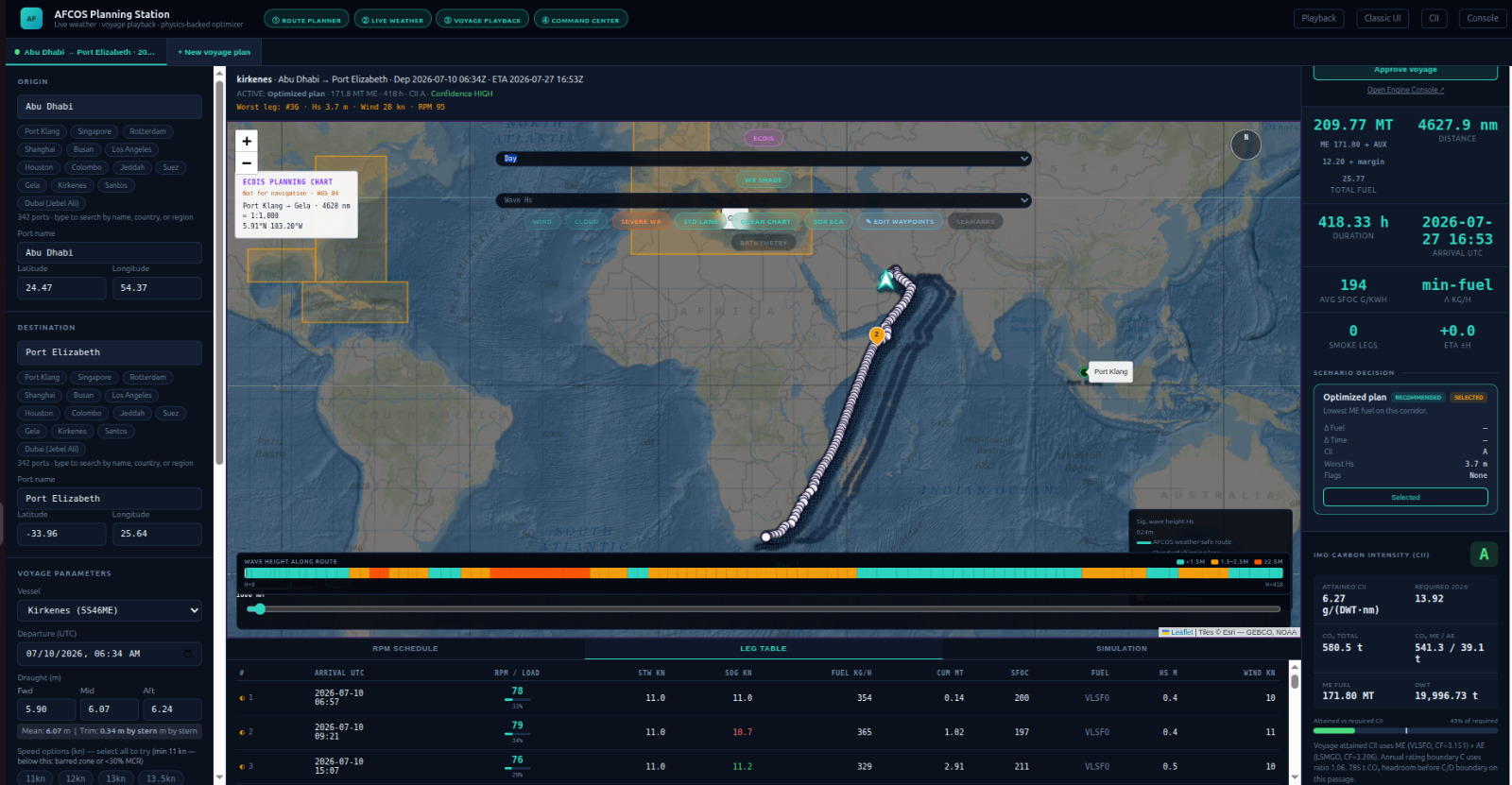
Route and speed plans that weigh ETA, fuel cost, and weather constraints across the full passage.
Weather-integrated guidance that balances ETA, fuel cost, and operational limits.
Wave, swell, and wind data fused into added-resistance and voyage planning.
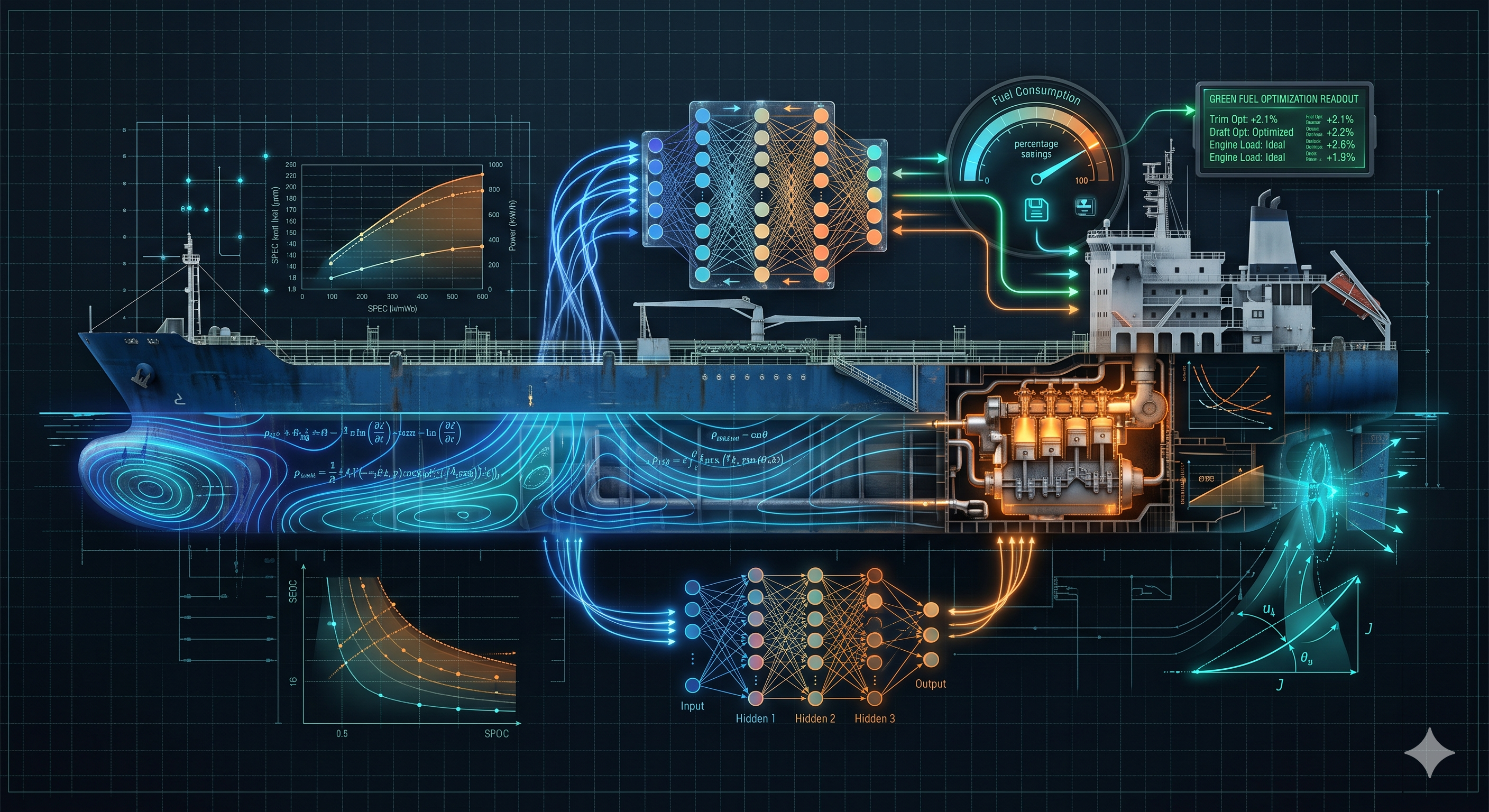
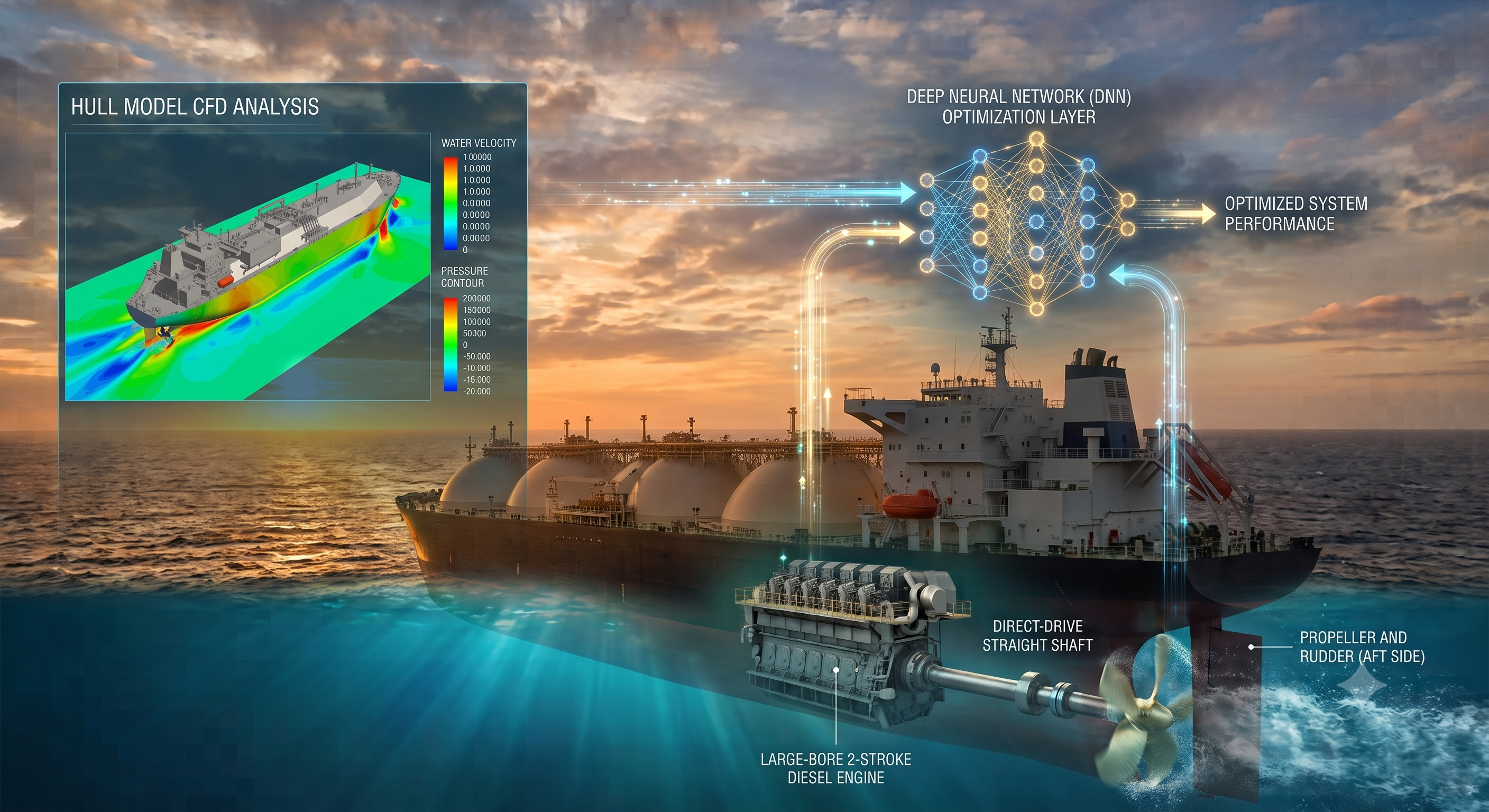
Physics-informed two-stroke engine models with SCADA-aligned exhaust and load monitoring.
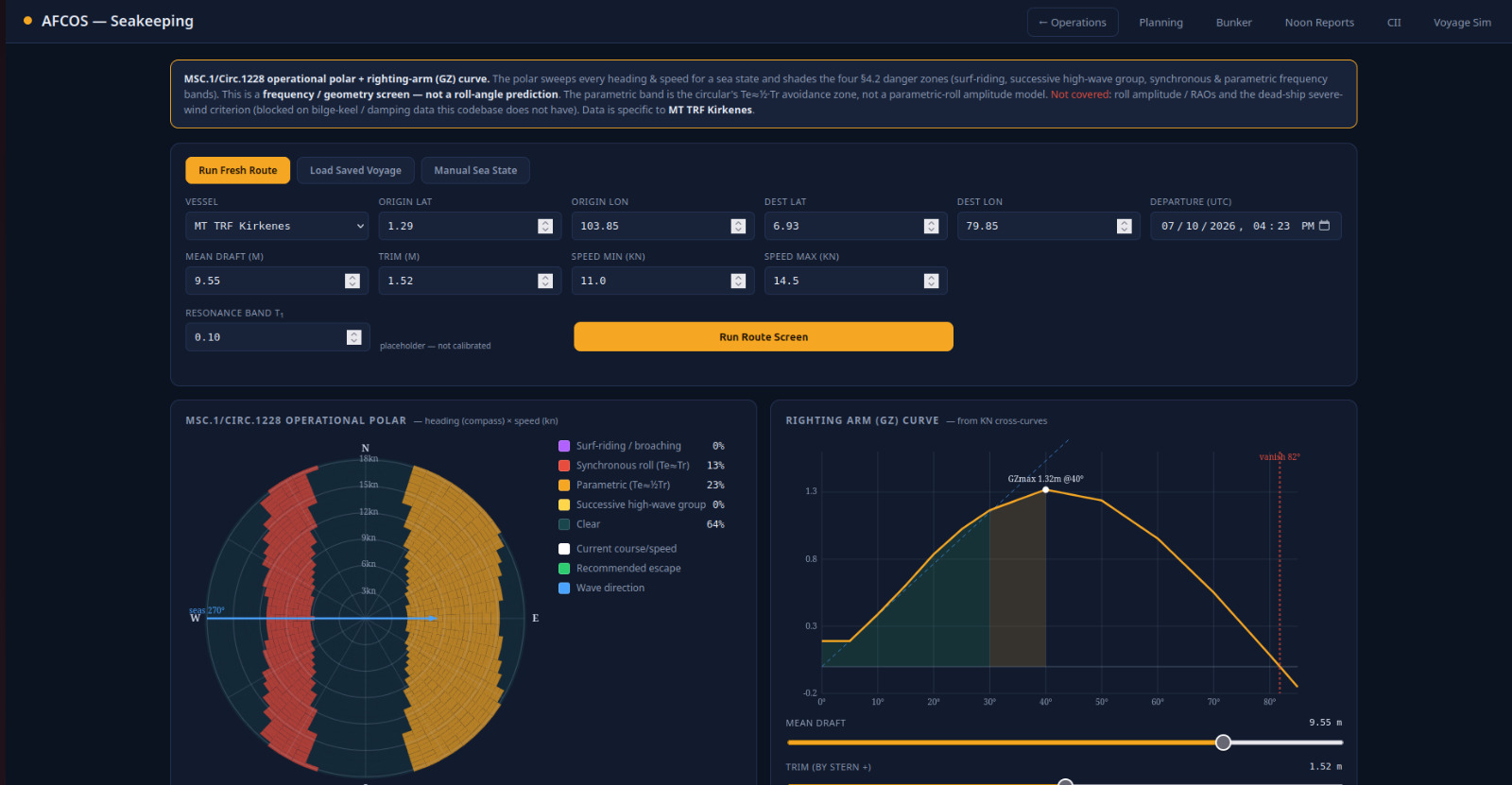
Predicts roll, pitch, and slamming in waves, then recommends heading and speed to protect ship and cargo.
Forecasts consumption against bunker prices to optimise purchase timing, quantity, and port selection.
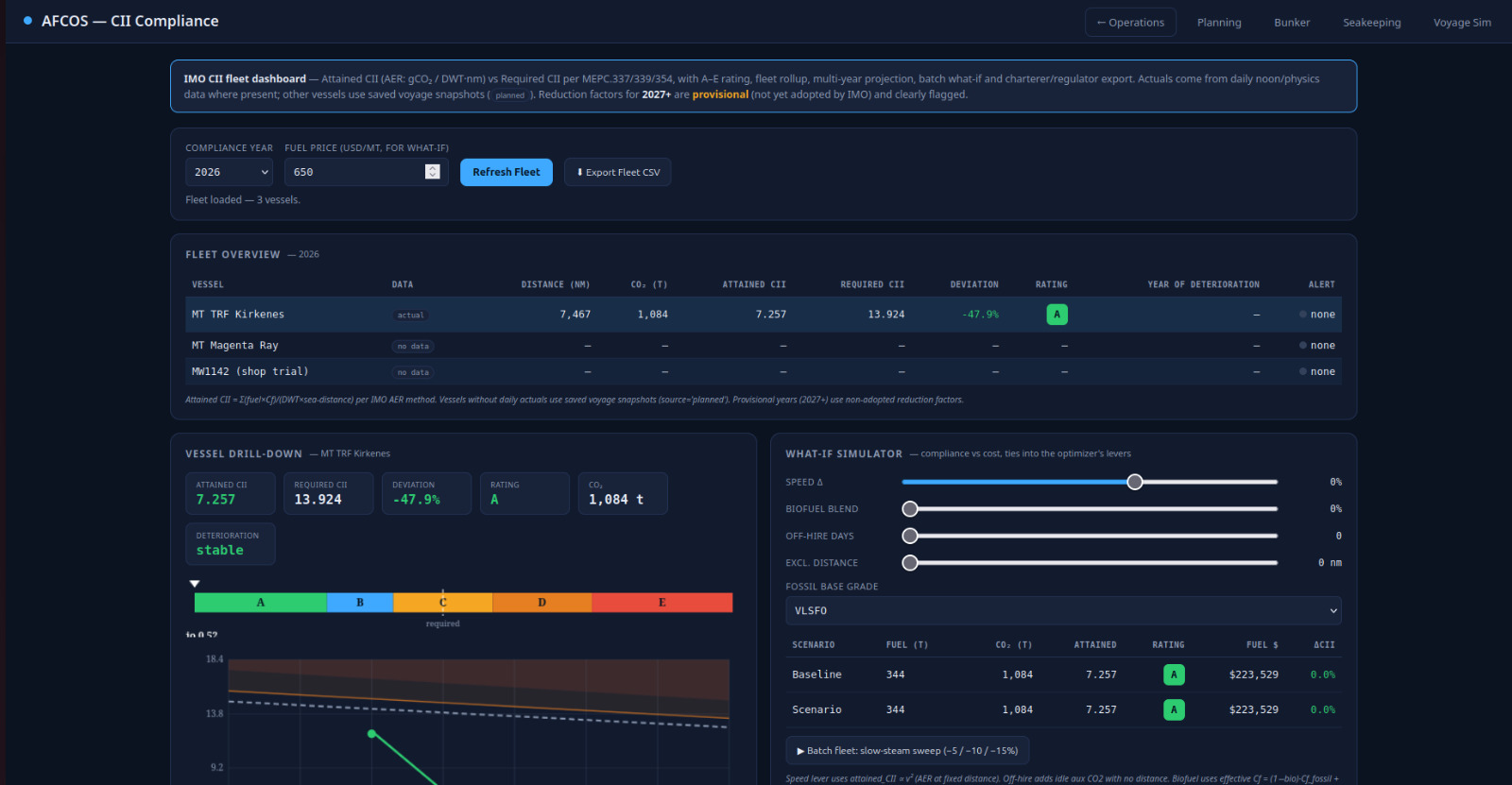
Tracks and forecasts a vessel's IMO Carbon Intensity Indicator (A–E) rating to plan ahead for compliance.
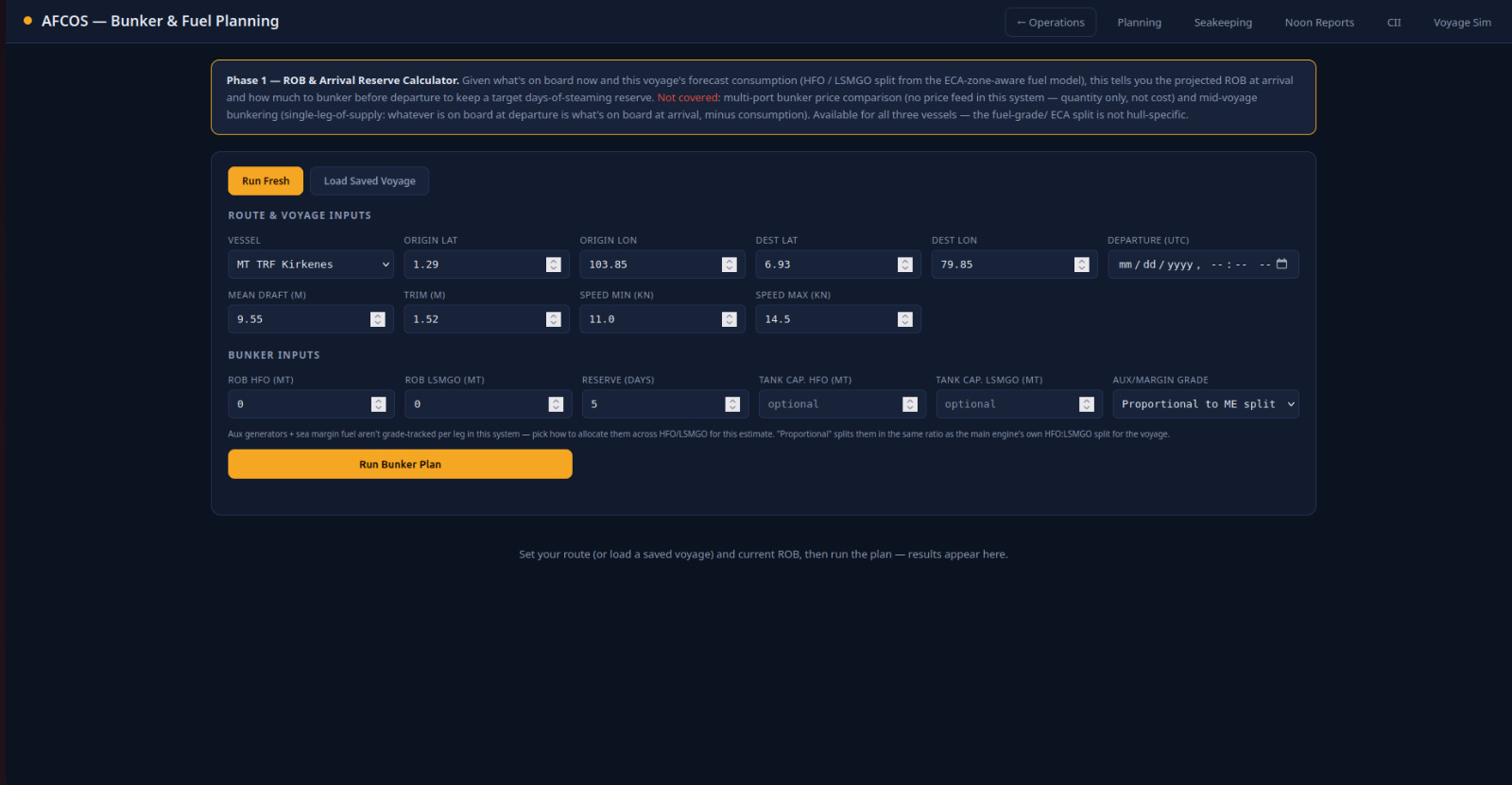
02 — Live system — MT TRF Kirkenes
Real screens from an active AFCOS deployment aboard MT TRF Kirkenes — voyage planning, IMO CII compliance, seakeeping safety, and bunker planning in one connected platform.
03 — Physics-informed engine
AFCOS is built on a hybrid Digital Twin framework driven by Physics-Informed Artificial Intelligence (PIAI). Hydrodynamic and thermodynamic principles are embedded directly into the models, so predictions stay bounded by real hull, propeller, and engine behaviour.
| Feature | Standard AI optimisation tools | Sealink physics-governed AI |
|---|---|---|
| Data dependency | Requires massive historical datasets; vulnerable to data gaps or sensor anomalies. | Operates accurately even with sparse data because the system is anchored by physical laws. |
| Operational extrapolation | Poor performance when extrapolating to unprecedented weather conditions or new routes. | Safely extrapolates across operating envelopes because physics constraints dictate the boundaries. |
| Root-cause diagnostics | Tells you that efficiency is dropping, but cannot accurately pinpoint why. | Isolates whether the loss stems from hull fouling, propeller decay, or internal engine deterioration. |
04 — What makes it work
AFCOS combines real hull and engine physics with live weather and sea-state data, so it predicts engine behaviour under the conditions ahead — not just from past patterns. That holds up on routes and conditions the system has not seen before.
Because AFCOS understands how the engine behaves under different loads and sea conditions, it recommends speeds and power settings that protect the engine over the long run — not just save fuel today at the cost of wear tomorrow.
AFCOS makes recommendations — it does not take over. Every suggestion comes with clear overrides and alerts, so the people on the bridge stay in charge.
Target vs. measured
AFCOS is engineered toward a 15% target fuel savings — a model-driven design goal, not a guaranteed or universally achieved result. Deployment evidence above reflects the system running live aboard MT TRF Kirkenes; savings figures will be published separately as measured, voyage-verified results become available.
Fleet integrations, pilots, and R&D collaboration — talk to our team.